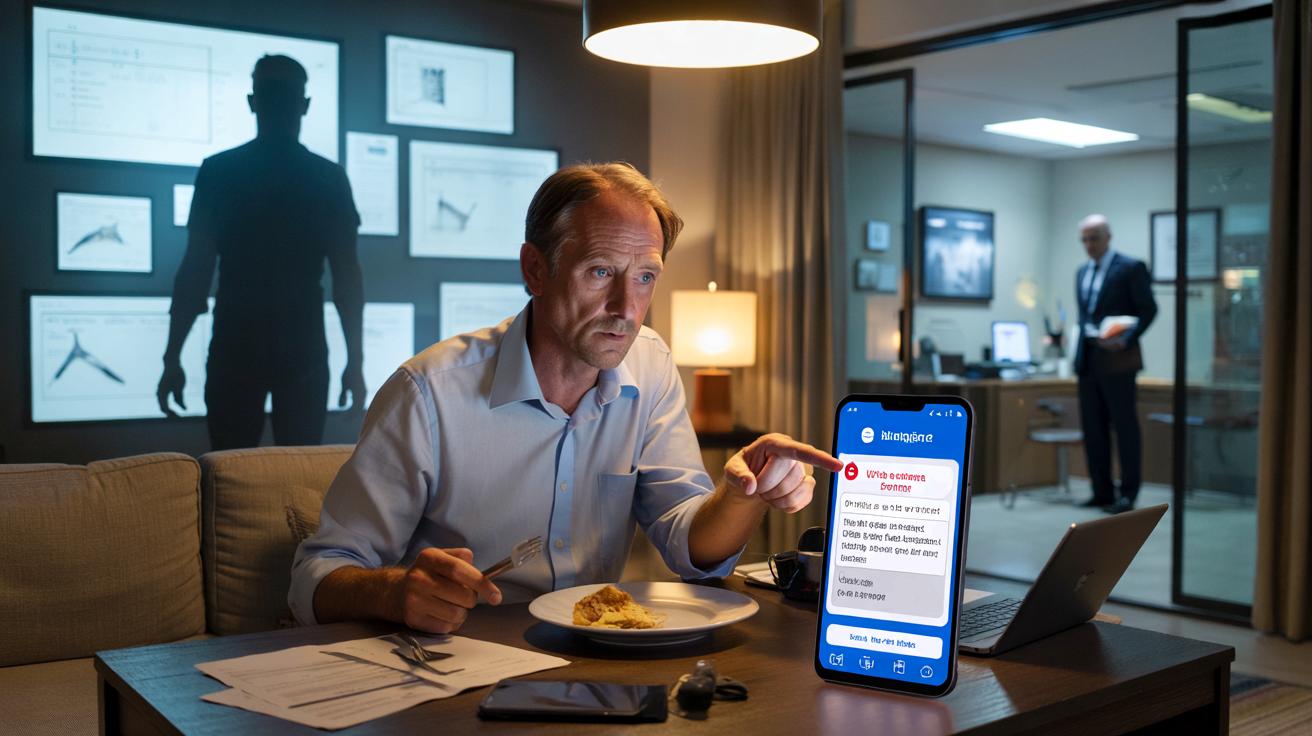
The email arrived on a Tuesday evening, right in the middle of dinner. Subject line: “Urgente – Operazione sospetta sul suo conto”. The kind of line that makes your fork freeze halfway to your mouth. Marco, 52, employee, mortgage and two kids at university, felt that familiar knot in his stomach. He clicked. The logo looked perfect, the tone was formal, the link opened the usual home banking screen. Or so it seemed.
Two hours later, three transfers were flying out of his account to unknown IBANs.
Days of calls, certified letters, legal threats. The bank repeated the same phrase: “Colpa del cliente, ha inserito lui i codici”. Then, something broke this wall. A judge said: no, the bank must refund.
Victory of justice. Or silent alarm bell for a new kind of carelessness.
Banks under pressure: when digital scams reach the courtroom
On paper, the story looks clean: customer gets scammed online, money disappears, bank pays back. In reality, every case like this shakes the entire balance of our digital lives. Because the judge’s ruling does not just settle a single dispute. It rewrites, bit by bit, the unwritten contract between us and the financial system that manages our savings.
Banks have pushed us into apps, tokens, QR codes, instant transfers. Faster, easier, cheaper. Now, those same tools have become the highway for very sophisticated frauds. Who pays when something goes wrong?
Take a real case that has been circulating in legal circles in Italy. A customer receives an SMS apparently from his bank: same sender name, same thread as previous legitimate messages. The text warns of a fake payment and invites him to “block it” via a link. He clicks, lands on a clone site that looks perfect, enters credentials and OTP. Ten minutes later, thousands of euros vanish.
He reports the incident immediately. The bank replies that the operations were “regularly authorized”. After months of back-and-forth, a court overturns that version: the security system was not adequate against advanced phishing, the customer could not realistically distinguish the fake message. Result: bank ordered to refund. And not just “for goodwill”, but as a legal duty.
These rulings are based on a clear idea: in the PSD2 era, the bank must guarantee “strong authentication” and serious fraud prevention. If criminals manage to bypass those defences using ultra-convincing social engineering, judges start asking if the system was really robust. The reasoning is subtle. Nobody excuses reckless behaviour, but **the professional player in the relationship is the bank**, not the account holder scrolling half-distracted on the sofa.
That said, fear is growing among bankers. If every online scam ends up being reimbursed, what stops customers from becoming careless with links, passwords, or Wi-Fi in the café downstairs?
Where responsibility stops: healthy vigilance or digital recklessness?
There is a simple gesture that changes everything: pausing. That five-second pause before clicking any link related to your money. Not an exaggerated paranoia, just a small built-in brake. Read the sender carefully. Does the bank really talk to you like that? Does it pressure you to act “immediately” or lose everything? Close the message, open your bank’s official app on your own, and check if there are alerts there.
➡️ Cosa succede quando inizi a proteggere il tuo tempo
➡️ Perché il disordine mentale spesso nasce da quello fisico
➡️ “Mi sentivo sempre di corsa”: cosa ho capito col tempo
➡️ “Ho lasciato competere leggermente le piante” e l’equilibrio è emerso
➡️ Perché rallentare non significa perdere tempo, ma usarlo meglio
➡️ Cosa cambia quando inizi a proteggere davvero il tuo tempo personale
That pause is free. It doesn’t require an IT degree. And yet it would destroy half of the scams circling around today.
Many victims are not naive, and that needs to be said out loud. We’re talking about professionals, teachers, lawyers, entrepreneurs. People who know that “the bank never asks for your password” and still fall for it after a long day, with the phone full of notifications and a child shouting in the next room. We’ve all been there, that moment when fatigue lowers our guard at the worst possible second.
The risk with these court victories is subtle: you read “bank forced to refund” and unconsciously relax. A little less attention, a click taken lightly, because “well, in the end they’ll have to pay”. That’s the dangerous mental slide. The line between legitimate consumer protection and a sort of digital recklessness can be frighteningly thin.
Banks are scared of exactly this spiral. Behind closed doors, compliance managers say it with disarming bluntness.
If reimbursement becomes automatic, we lose the ally we desperately need: the customer’s active vigilance.
At the same time, consumer associations remind us that for years **institutions have pushed for online channels**, cutting physical branches and human contact. You can’t ask people to handle everything with a tap and then unload all the risk onto them.
Some hard truths fit into a short list:
- Most people reuse the same password on too many services.
- Almost nobody reads the full SMS before clicking the link.
- Security alerts from the bank are often written in bureaucratic language.
- Fraudsters invest more in psychology than in technology.
- *User education moves slower than cybercrime’s creativity.*
Let’s be honest: nobody really updates their security habits every single week.
A ruling that changes us: what this means for your next click
A judgment that forces a bank to refund stolen funds is not just a legal detail. It is a message to the market, regulators, software vendors, and yes, to you reading this on your phone. It says: “Your digital system has holes, and you can’t pretend they don’t exist.” This can push banks to redesign apps, tighten alerts, change the way they verify suspicious operations in real time.
At the same time, rulings don’t fix human behaviour. They don’t touch that lazy swipe, the distracted click, the small voice we silence when a message looks “a bit off, but I’m in a rush”. That part is on us, and no court can rewrite it with a sentence.
| Key point | Detail | Value for the reader |
|---|---|---|
| Banks’ duty of protection | Courts are reinforcing the idea that banks must have robust anti-fraud systems and clear alerts | Gives you leverage if you’re a victim and the bank initially refuses reimbursement |
| Shared responsibility | Judges weigh both technical safeguards and the customer’s behaviour in each case | Helps you understand when you might be considered negligent and when not |
| Everyday defence | Simple habits: pause before clicking, use the official app, verify alerts via trusted channels | Reduces your real-world risk of losing money, regardless of what any ruling says |
FAQ:
- Question 1Does a ruling against a bank mean all online fraud victims will get reimbursed?
- Question 2What should I do immediately if I realise I’ve fallen for a phishing scam?
- Question 3How do judges decide if I was “careless” with my online banking?
- Question 4Can a bank be liable even if I personally entered the OTP code?
- Question 5What practical steps can I take today to lower my risk without becoming paranoid?